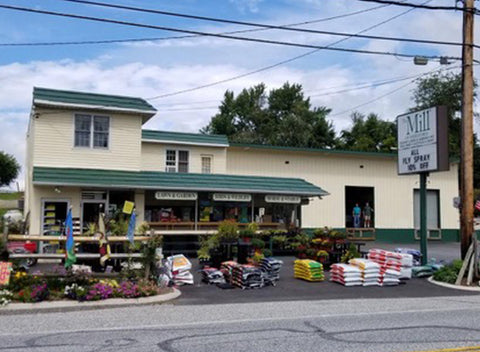

By late summer, most lawns in Maryland and Pennsylvania are showing the effects of heat, humidity, and foot traffic. Grass that looked full and green in May can start to thin out and lose its color by August. That is exactly what Step 3 of The Mill's 4-Step Lawn Program is built to address, and getting the timing right makes a real difference in how your lawn recovers heading into fall.
Why Summer Takes a Toll
Heat stress, drought, and heavy use all pull energy away from a lawn's ability to maintain color and density. Even lawns that received a strong start in spring with Step 1 and Step 2 can look worn down by the time August rolls around. Without some additional support, a lawn under this kind of stress heads into fall already behind, which makes it harder to bounce back before winter.
What Step 3 Does
Step 3, The Mill's 22-0-14 with 50% SCU and 5% Iron, is formulated specifically for this point in the season. The slow-release nitrogen helps rebuild strength in the grass without pushing excessive, tender growth that struggles in the heat, while the added iron gives your lawn a deeper green color without forcing rapid top growth. Together, these help your lawn recover from summer stress and build resilience against heat, traffic, and dry conditions, all while setting the stage for the fall growth push that cool-season grasses are known for.
When to Apply It
The ideal window for Step 3 is late summer, generally around Labor Day. Applying too early means you miss out on some of the recovery benefit, since the lawn is still fighting through the hottest stretch of the season. Applying too late pushes the benefit closer to Step 4 territory and can crowd your fall fertilizing schedule. As with every step in the program, watering it in after application helps the product move into the root zone where it can start working.
How It Fits Into the Bigger Picture
Step 3 is the bridge between the stress of summer and the growth window of fall. If you are already following the program, this is simply the next step after Step 2. If you have not been following the full program, Step 3 is still worth considering on its own, especially if your lawn is showing thin patches or faded color right now. A quick soil test can help confirm what your lawn actually needs at this stage, and our why soil testing matters post walks through what to expect from the process. Step 3 also sets up nicely for Step 4 this fall, which focuses on building root strength heading into winter, so the two work together rather than in isolation.
A Note on Weeds
If summer weeds have taken hold alongside the stress and thinning, our guide to identifying common lawn weeds can help you figure out what you are dealing with before you treat. Addressing weeds now, alongside Step 3, gives your lawn a cleaner start once fall seeding season arrives.
Let Us Help You Finish the Season Strong
Every lawn handles summer stress a little differently, and the right approach depends on your grass type and how your lawn has held up so far this year. Stop in and talk with our lawn and turf team, browse our full lineup of lawn fertilizer and lime, or explore our lawn and turf services if you want a hand building out the rest of your program. We are glad to help you get your lawn through the rest of summer and into a strong fall.