
There is nothing quite like the anticipation of that first egg. If you have been raising a flock of pullets, you have probably already caught yourself checking the nest box more often than you need to. The good news is that pullets give you plenty of signs before that first egg shows up, and knowing what to watch for helps you time the switch to layer feed the right way, which matters more than most new flock owners realize.
Signs Your Pullet Is Getting Close
Most pullets start laying somewhere between 16 and 24 weeks of age, though the exact timing depends on breed. Beyond age, there are a few physical and behavioral cues that tell you an egg is on the way. Watch for the comb and wattles turning a deeper red and growing larger, since this is a sign of hormonal changes tied to laying maturity. You may also notice your pullet squatting low to the ground when you approach her, a reflexive posture hens use once they are physically ready to breed and lay. Increased curiosity around nest boxes, more vocalization, and a generally more settled temperament are all good signs that the first egg is close.
Many pullets also start eating and drinking more than usual right around this time, since their bodies are ramping up to support egg production. Because of this, feed and fresh water should be available around the clock, or at least during daylight hours, since chickens do not see well in the dark and will not eat or drink much once the sun goes down.
Why the Timing of the Switch Matters
This is the part that trips up a lot of first-time flock owners. Layer feed is formulated with significantly more calcium than starter grower feed, since laying hens need that extra calcium to build strong eggshells. That same calcium level is too much for a pullet that is not laying yet, and over time it can lead to kidney damage and other health issues. Switching too early, just to be prepared, can actually work against your flock. Switching too late means your newly laying hens are not getting the calcium and nutrients they need to keep producing well and stay healthy.
When to Make the Switch
Most layer feed bags recommend starting the switch at 16 weeks of age, and that is the timing to go by rather than waiting for the first egg to appear. A pullet's body starts preparing to form eggshells before she actually lays, which means she needs that extra calcium in place ahead of time, not after the fact. Waiting until you see an egg means she has already been building toward that first shell without the calcium support she needed to do it.
If you have a mixed-age flock, keep any birds under 16 weeks on a starter grower feed and switch birds 16 weeks and older over to layer feed. Offering oyster shell free choice in a separate dish lets your layer-feed birds take in extra calcium as needed without risking the younger, still-growing birds getting more than they should from a shared feeder.
Making the Transition
Once you are ready to switch, a gradual transition over several days, mixing the new layer feed in with the remaining starter grower, tends to go more smoothly than an abrupt switch. Our Mill Layer Pellets and Mill Layer Mash are both formulated for hens 16 weeks and older and give you a solid, dependable option to start with. Continue offering oyster shell alongside layer feed even after the switch. Our post on egg eating in chickens explains why that extra calcium source matters even once hens are established layers, since weak shells are one of the most common triggers for the behavior.
This is also a good time to set up your nest boxes for success. Placing a fake egg, or even a golf ball, in each box helps teach young pullets where they are supposed to lay. Hens tend to lay where they see eggs already, so a decoy egg gives her the hint before she has laid her first one on her own.
We Are Here to Help
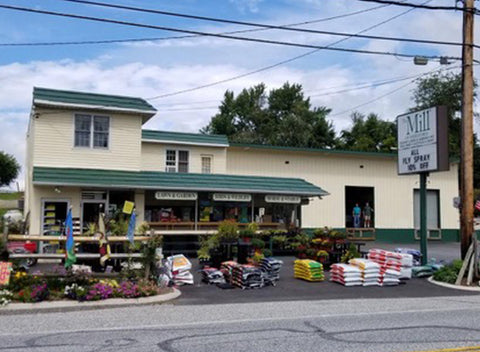
If you started your flock with us through our Ready-to-Lay Pullet Program, or you raised chicks from day one, our poultry team can help you figure out exactly where your flock stands and what feed makes sense for their stage. Stop by any Mill location, browse our full poultry selection, or keep an eye out for one of our backyard poultry events, where we cover everything from brooding to that first egg. Raising a healthy, productive flock starts with getting these small timing decisions right, and we are glad to help you through it.