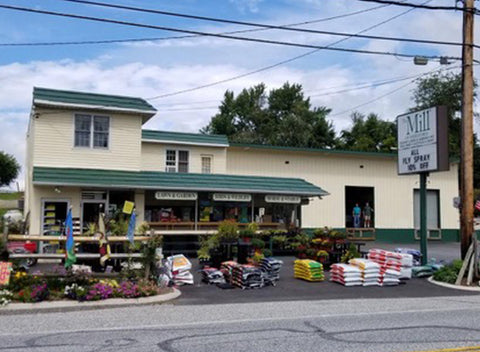

Certified Crop Advisor Ben Hushon with The Mill joined Market Day Report this week from a field of double crop soybeans in Whitehall, Maryland with a field update that reflects the dual reality of mid-summer in agricultural communities across the Mid-Atlantic: the fairs are running, the crops are growing, and both are doing it under less rain than anyone would like.
Fair Season Is a Reminder of What Agriculture Is Really About
This week the York Fair is running in Pennsylvania. Cecil County Fair and the Harford County Fair are both underway in Maryland. For Ben, these events represent something worth pausing on before getting into the agronomic details.
What strikes him most is not the livestock competitions or the food vendors, but the behind-the-scenes reality of what those shows represent. Non-agricultural businesses showing up to bid at livestock auctions, businesses with no direct connection to farming, coming out to support 4-H and FFA students who have put in tireless, endless hours caring for animals they have raised themselves. Those students and the parents who made it happen rarely get the recognition the effort deserves.
Fairs also carry a longstanding agricultural joke that Ben acknowledged directly. Fair season normally brings storms and rain. That has not exactly been the case recently.
A Half Inch Helped, But the Crops Want More
Tuesday night into Wednesday brought about a half inch of rain to the Whitehall area, and Ben was clear that it was a welcome development. But half an inch during the heat of July and August, when corn is pushing through grain fill and newly planted double crop soybeans are trying to establish root systems in dry soil, is not what either crop needs to perform at its potential.
The target that Ben put on the table is one to one and a half inches of rain per week during July and August. That is what corn and soybeans are demanding at this stage of the season. Anything consistently below that threshold, and the crops are managing moisture stress rather than growing without limitation.
The double crop soybeans Ben was standing in, planted after wheat harvest just weeks ago, are telling exactly the same story the cornfields are telling. They need another drink of water.
What a Drought-Stressed Soybean Root Looks Like
One of the most illustrative moments of this week's update came when Ben pulled a double crop soybean plant from the ground and showed viewers what was happening below the surface. The plant itself was small, still in early establishment given how recently it was planted. But the root system it had developed was already nearly half as deep as the above-ground portion of the plant was tall.
That root-to-shoot ratio tells an important agronomic story. When soil moisture is limited near the surface, soybean plants respond by prioritizing downward root growth over above-ground development. The plant is essentially making a calculated investment, diving deep to find whatever subsoil moisture is available rather than building canopy in a dry environment that cannot support it.
It is a remarkable demonstration of how crops respond to stress, and a clear signal of the conditions these double crop beans are navigating in their first weeks in the ground.
Corn Looks Good but Not Great Heading Into Grain Fill
The host asked Ben directly how he feels about trendline yields in his footprint, and his answer was measured and honest in the way that agronomists who spend time in actual fields tend to be.
Corn looks good. It does not look great. The distinction matters. The dry conditions that have persisted through much of the summer have prevented the crop from reaching its full ceiling, but Ben expressed genuine confidence in the corn across the community. The inputs went in at the right time, the fungicide applications to protect against gray leaf spot were completed during the critical tasseling window, and the crop has handled the stress reasonably well. For those reasons he feels really good about the corn.
Soybeans are a different conversation. Ben was direct about the limits of mid-season soybean assessment: he cannot walk a field in late July and tell you what it is going to yield until the combine comes through. Soybeans are simply too unpredictable at this stage. Pods are still setting. Grain fill has not begun in earnest. Weather between now and harvest will determine the outcome in ways that no amount of field scouting can fully anticipate.
The honest answer for soybeans heading into late summer is that the potential is there but the crop needs rain to realize it.
What This Week's Market Numbers Mean for Growers
The commodity market backdrop this week is worth noting for growers managing unpriced bushels heading into harvest. Corn September contracts are trading at $4.52, down 12.25 cents, with December at $4.74 also down 12.25 cents. Soybeans are taking a significant hit, with the August contract at $12.07, down 40.5 cents, and the November new crop contract at $12.13, also down 40 cents. Chicago soft red wheat is at $6.73, down 5 cents on the September contract, while Kansas City hard red wheat September sits at $7.39, down 5.5 cents.
Meaningful down days across the board during the heart of grain fill season are a reminder of why forward marketing decisions made earlier in the season, when prices were stronger, matter so much to the overall economics of a crop year.
Farmers Are the Eternal Optimists
Ben closed this week's appearance with a phrase that has defined agricultural communities since long before anyone was tracking commodity markets on television screens. Despite a market moving in the wrong direction and a rain gauge that has not delivered what the crops are asking for, farmers are the eternal optimists. They are going to keep on farming.
That outlook is not naivete. It is the product of experience with exactly the kind of summer that tests patience and rewards persistence. The crops are in the ground, the management work has been done, and now the most important input of all, timely, adequate rainfall through August, is the one that nobody can purchase or schedule.
Connect With The Mill's Agronomy Team
The Mill's Agronomy Team is actively monitoring corn and soybean fields across Maryland and southern Pennsylvania through grain fill and double crop establishment. With the most critical rainfall window of the season now underway, having an agronomist tracking conditions and helping prioritize any remaining management decisions makes a real difference.
Connect with The Mill's Agronomy Team to keep your crop program on track through the second half of the season.