
Why Pollinators Matter More Than Most People Realize
Pollinators are not simply a pleasant feature of a summer garden. They are a foundational component of nearly every terrestrial ecosystem on the planet and a critical driver of agricultural productivity. Globally, pollinator-dependent crops account for roughly 35 percent of food production, including most fruits, vegetables, nuts, and the seed crops that feed livestock. Without pollinators, the variety and abundance of food available to people and wildlife alike would collapse dramatically.
In the Mid-Atlantic region, the situation for pollinators has become increasingly urgent. Habitat loss, pesticide exposure, disease, and the replacement of native plant communities with turf grass and non-native ornamentals have combined to put significant pressure on native bee populations, monarch butterflies, and dozens of other pollinator species that have historically been abundant in Maryland and surrounding states.
The good news is that homeowners have more direct influence on this problem than they may realize. Yards, garden beds, containers, and even small patches of lawn converted to flowering plants provide genuinely meaningful habitat when managed with pollinators in mind. Summer is the season when that effort pays off most directly.
Who the Pollinators Are
When most people think of pollinators, honeybees come to mind first. In reality, the pollinator community in the Mid-Atlantic is far more diverse and ecologically important than a single species.
Native Bees are the most critical pollinators in the region and include over 400 species in Maryland alone. Bumblebees, mason bees, sweat bees, leafcutter bees, and mining bees all provide pollination services that honeybees cannot replicate for certain plant species. Many native bees are solitary ground-nesters or cavity-nesters, which means the bare patches of soil and dead wood that homeowners are tempted to clean up are actually nesting habitat.
Monarch Butterflies are one of the most recognized pollinator species in North America and one of the most imperiled. Their population has declined by more than 80 percent over the past two decades, driven primarily by habitat loss along their migration corridor and the widespread elimination of milkweed, the only plant monarch larvae can consume. The Mid-Atlantic lies directly along the eastern monarch migration route, making this region's gardens critically important to the species' survival.
Other Butterflies and Moths provide significant pollination services and are often overlooked. Swallowtails, fritillaries, sulfurs, skippers, and a range of native moth species all visit flowers for nectar and contribute to pollination across the region. Many moths are nighttime pollinators that serve plants not accessible to daytime visitors.
Hummingbirds are important pollinators of tubular flowers and are present in the Mid-Atlantic from late April through early fall. Ruby-throated Hummingbirds are the primary species in the region and are attracted to red, orange, and pink flowers with tubular structure, including salvia, bee balm, coral bells, and trumpet vine.
Beetles and Other Insects were among the earliest pollinators on Earth and remain important for a range of native plant species. Goldenrod in particular supports a diverse community of beetle pollinators in late summer and fall.
The Biggest Threat in the Backyard: Pesticide Timing
Before adding a single plant to the garden, the most impactful step a homeowner can take for pollinators is reconsidering pesticide application timing and targeting.
Broad-spectrum insecticides applied to flowering plants during bloom are directly harmful to pollinators. Bees, butterflies, and other beneficial insects visiting flowers for nectar and pollen are exposed to systemic and contact insecticides in ways that cause acute and chronic harm. This applies to both synthetic and botanical products.
Practical guidelines that protect pollinators while still allowing pest management:
- Avoid applying any insecticide to plants that are in bloom or visited by pollinators
- If treatment is necessary, apply in the evening when pollinators are less active and allow the product to dry before morning activity resumes
- Target pest applications as precisely as possible rather than broadcasting insecticides across the entire garden
- Avoid routine preventive sprays on flowering plants and treat only when pest pressure warrants it
This single behavioral shift, being intentional about when and where insecticides are applied, has more immediate impact on pollinator health in the backyard than almost any other individual action.
What to Plant: Building a Summer Pollinator Garden
Plant selection is where homeowners can make the most lasting contribution to local pollinator populations. Native plants are the most ecologically valuable choice because they have co-evolved with native bee and butterfly species over thousands of years. Many native bees can only use pollen from specific plant families, which means the presence or absence of those plants directly determines whether those bees can survive and reproduce in a given area.
The following plants are among the most valuable for Mid-Atlantic pollinators during the summer months and are well-suited to home gardens in the region.
Milkweed (Asclepias) is the single most important planting a Mid-Atlantic homeowner can make for monarch butterflies. It is the only host plant monarch larvae can use, and without it the species cannot reproduce. Common milkweed (Asclepias syriaca), butterfly weed (Asclepias tuberosa), and swamp milkweed (Asclepias incarnata) are all native to the region and support monarchs from late spring through fall.
Black-Eyed Susan (Rudbeckia hirta) is a native Maryland wildflower that blooms prolifically through summer and supports a wide range of native bees, small butterflies, and beetles. It is drought tolerant, long-blooming, and seeds itself reliably, making it one of the lowest-maintenance pollinator plants available.
Purple Coneflower (Echinacea purpurea) is a native perennial that provides nectar for butterflies and specialist native bees from midsummer through fall. Its seed heads, if left standing, feed goldfinches and other seed-eating birds after pollinator season winds down.
Bee Balm (Monarda) is a native perennial that blooms in shades of red, pink, and lavender and is particularly valuable for bumblebees, hummingbirds, and clearwing moths. It spreads readily and does well in moist garden conditions.
Goldenrod (Solidago) blooms in late summer and fall and supports more pollinator species than almost any other native plant in the region. It is often misidentified as the cause of hay fever (that distinction belongs to ragweed, which blooms at the same time). Goldenrod is an essential late-season nectar source when most other flowers have finished.
Lavender (Lavandula) is not native but is a highly reliable nectar source for honeybees and bumblebees and performs well in full sun with good drainage. It blooms in early to midsummer and fills a useful gap in the seasonal nectar calendar.
Zinnias are another non-native but extremely productive pollinator plant, particularly for butterflies. They bloom continuously from summer through frost when deadheaded and are among the easiest flowering annuals to grow from seed. Monarch butterflies visit zinnias readily during late summer migration.
Sunflowers (Helianthus) provide both nectar and pollen in abundance and support specialist native bees that depend on Helianthus pollen specifically. They also feed birds as seeds mature in fall.
Salvia in both annual and perennial forms provides tubular flowers that hummingbirds and long-tongued bees visit heavily. Red and blue salvias are particularly effective.
Wildflower Mixes: The Easiest Starting Point
For homeowners who want to convert a sunny area to pollinator habitat without designing a planting bed from scratch, wildflower seed mixes offer a practical and effective solution. Sown in spring or fall, they establish quickly and provide a diverse range of bloom times, flower shapes, and plant heights that support a broader range of pollinator species than any single planting could.
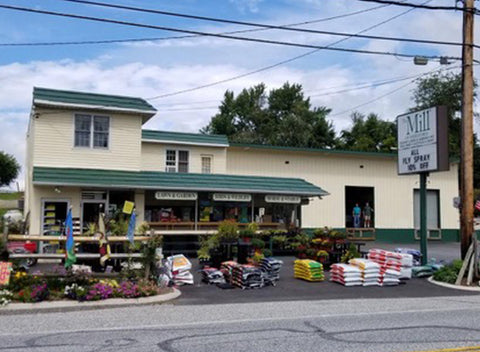
The Mill carries several wildflower seed options suited to Mid-Atlantic conditions:
Northeast Mix Wildflower Seed is a blend of annual and perennial wildflower seeds specifically selected for the Northeast region. It adds vibrant color and fragrance while attracting native pollinators and wildlife, and reseeds naturally to extend the planting over multiple seasons.
Northeast Wildflower Mix Seeds Packet is a compact packet option for smaller plantings or testing a new area. The same regional mix in a convenient size for raised beds, borders, or container pollinator plantings.
Wildflower Annual and Perennial Seed Mix is a diverse mix suited for pollinator-friendly areas and naturalized plantings. It is particularly well suited for converting low-maintenance areas, retention basins, and back corners into productive habitat.
Encap Wildflower Pollinator Mix is an all-in-one formula that includes seeds, natural mulch, plant food, and soil conditioners in a single application. Its 13 flower species include purple coneflower, zinnia, and candytuft, and the patented Water Right Crystals support establishment in variable moisture conditions.
Encap Wildflower Butterfly and Hummingbird Mix is formulated specifically for butterfly and hummingbird attraction, with zinnia, cosmos, Shasta daisy, sweet William, and black-eyed Susan. It includes the same all-in-one seed and soil conditioner system and is available in a 2-pound bag suitable for a meaningful planting area.
Supporting Hummingbirds Through Summer
Ruby-throated Hummingbirds are present in the Mid-Atlantic through early fall and are highly responsive to both planted nectar sources and supplemental feeders. Maintaining clean feeders with fresh nectar through summer provides a reliable food source during the high-energy period of late summer when natural flower availability can become inconsistent.
The Mill's hummingbird collection includes feeders, nectar, and feeder care products to support hummingbirds through the season. Pairing a feeder with plantings of Heuchera, salvia, bee balm, and trumpet vine creates a comprehensive hummingbird habitat that provides both nectar and natural foraging opportunities.
Simple Habitat Improvements That Cost Nothing
Some of the most effective pollinator support actions in a home garden require no purchases at all.
Leave leaf litter and bare soil patches. Many native bees nest in the ground or in leaf litter. Areas of unmulched, undisturbed soil and leaves left in place over winter provide critical nesting habitat that a perfectly manicured yard eliminates.
Stop mowing a section of the lawn. A patch of unmowed grass allowed to develop clover, dandelions, and other low-growing flowering plants provides significant early-season pollinator forage. Even a small unmowed area makes a difference.
Leave seed heads standing through fall and winter. Coneflower, black-eyed Susan, and other native perennials with seed heads left standing through the dormant season feed birds and provide overwintering habitat for beneficial insects.
Reduce or eliminate night lighting near gardens. Artificial light disrupts the activity patterns of moth pollinators and other nocturnal insects. Minimizing unnecessary outdoor lighting near garden areas reduces this disturbance.
Provide a shallow water source. Bees and butterflies need water and are attracted to shallow, reliable sources. A shallow dish with stones that provide landing spots is sufficient and requires only occasional refilling and cleaning.
The Larger Picture
Every yard in the Mid-Atlantic is a piece of a larger habitat corridor. When enough homeowners plant nectar and host plants, reduce pesticide use during bloom, and leave some undisturbed areas for nesting, the cumulative effect on local pollinator populations is measurable. The problem is real, but it is also genuinely responsive to the individual decisions being made in backyards across the region.
For more on specific plants that support pollinators through the seasons, The Mill's existing guides on pollinators and how to support them and flower bulbs for pollinators cover additional planting and seasonal timing recommendations.
Browse The Mill's full flower seed collection and hummingbird collection at themillstores.com, or visit any local The Mill store for guidance on building a pollinator-friendly garden suited to specific site conditions.