
The Mid-Summer Gap Is Real, and It Matters
Late June through August is a critical window for pollinators in the Mid-Atlantic. Spring bloomers have finished, fall asters and goldenrod have not yet opened, and many gardens go through a relative quiet period exactly when pollinators are most active and most in need of consistent food sources.
Filling that gap with plants that thrive in summer heat and humidity is one of the most meaningful contributions a home gardener can make to the local pollinator community. The plants that do this best are not delicate. They are rugged, adaptable, largely native, and they bloom when the garden needs them most.
Perennials That Perform in the Mid-Summer Heat
The following perennials are proven performers through the hottest and most humid weeks of the Mid-Atlantic gardening season. Most are native or near-native to the region, which makes them naturally suited to the climate and particularly valuable to the native bees and butterflies that have co-evolved with them.
Rudbeckia (Black-Eyed Susan) is one of the most reliable and recognizable mid-summer perennials available. Its bright yellow flowers with dark centers bloom from midsummer through early fall and are visited by a wide range of native bees, butterflies, and beetles. Drought tolerant once established and self-seeding in favorable conditions, it is one of the easiest native perennials to establish and maintain.
Phlox paniculata (Garden Phlox) produces large, fragrant flower clusters in white, pink, red, lavender, and bicolor combinations from midsummer through late summer. It is a particularly important nectar source for swallowtail butterflies and hummingbird moths, which are attracted to its tubular, clustered blooms. Selecting mildew-resistant cultivars improves long-term performance in the humid conditions common to the region.
Perovskia (Russian Sage) produces airy silver-grey stems with small lavender-blue flowers that bloom from midsummer through fall. It is drought tolerant, deer resistant, and heavily visited by bumblebees and honeybees. Its extended bloom period and low maintenance requirements make it a reliable backbone plant for the summer pollinator border.
Pycnanthemum (Mountain Mint) is a native perennial that is among the highest-rated pollinator plants available for the Mid-Atlantic region. Its small white flowers, which bloom from midsummer through late summer, attract an extraordinary diversity of native bee species, including many specialists rarely found on other plants. It spreads by rhizomes and is best given space to establish a small colony where its full impact can be realized.
Monarda (Bee Balm) blooms in shades of red, pink, and lavender from midsummer through late summer and is particularly valuable for bumblebees, hummingbirds, and sphinx moths. Native species including Monarda didyma and Monarda fistulosa are both productive pollinator plants. As with Phlox, choosing mildew-resistant cultivars extends the plant's garden performance through humid summers.
Asclepias (Milkweed) is the host plant for monarch butterflies and one of the most ecologically important plants a Mid-Atlantic gardener can establish. Several native species are suited to different garden conditions: Asclepias tuberosa (Butterfly Weed) thrives in dry, well-drained soil in full sun. Asclepias incarnata (Swamp Milkweed) performs well in moist to wet conditions. Asclepias syriaca (Common Milkweed) spreads readily and supports the largest monarch caterpillar populations of any native species.
Helianthus (Perennial Sunflower) produces bold yellow flowers from midsummer through fall and supports a wide range of native bees, including specialist Helianthus bees that depend on sunflower pollen specifically. Unlike annual sunflowers, perennial species spread by rhizomes and return reliably each year with increasing vigor.
Eupatorium dubium (Baby Joe Pye Weed) is a compact native that produces rosy-pink flower clusters from late summer through fall. It is one of the most important late-season nectar sources for migrating monarchs and swallowtail butterflies, and its smaller stature compared to full-sized Joe Pye Weed makes it more practical for home garden borders.
Echinacea (Purple Coneflower) blooms from midsummer into fall in the standard purple-pink species form and across a wide range of cultivated colors. It provides nectar for butterflies and specialist native bees during the bloom period and its seed heads feed goldfinches and other seed-eating birds through fall and winter. One of the most versatile and widely adapted native perennials for the region.
Chelone (Turtlehead) is a native perennial for moist to wet sites that blooms in late summer in white or pink. Its tubular flowers are specifically adapted to bumblebees, which are large enough to pry open the flower for access. It is one of the host plants for the Baltimore Checkerspot butterfly, Maryland's state insect, making it a particularly meaningful plant for the region.
Coreopsis (Tickseed) blooms in yellow, gold, orange, and bicolor forms from early summer through fall, particularly when deadheaded regularly. Native species including Coreopsis lanceolata and Coreopsis verticillata are excellent pollinator plants and well-adapted to the region. Thread-leaf varieties are particularly drought tolerant and long-blooming.
Why Plant Diversity Matters More Than Quantity
A garden planted with fifty of the same species is less valuable to pollinators than one with ten species well-represented across multiple locations. The reason comes down to nutrition.
Different plant species provide different combinations of amino acids, proteins, antifungal compounds, and sugars in their pollen and nectar. Bees and butterflies that access only one or two pollen sources receive a narrower nutritional profile than those foraging across a diverse plant community. Research increasingly supports the idea that nutritional diversity in the pollen diet directly affects the immune health, disease resistance, and reproductive success of native bee populations.
This is the same principle that drives dietary diversity recommendations for human health. A pollinator foraging across a diverse garden is simply healthier and more resilient than one limited to a single food source, regardless of how abundant that source is.
The practical takeaway for the home gardener is straightforward: plant multiple species, aim for staggered bloom times from early summer through fall, and repeat those plantings in several locations across the yard rather than concentrating everything in a single bed.
Monarchs, Milkweed, and Coexistence
Monarch gardening is more nuanced than simply planting one milkweed and waiting. Monarchs share their host plants with several other milkweed-dependent insects including tussock moth caterpillars, milkweed beetles, and milkweed bugs. When food becomes scarce, competition can develop, and monarchs, which are less aggressive than some of the other species, can be outcompeted on a single isolated plant.
The solution is the same principle that applies across the broader pollinator garden: diversity and distribution. Planting multiple species of Asclepias across multiple locations in the garden creates a distributed food supply that mimics the range and variety monarchs would encounter in a natural landscape. When milkweed is available in several spots throughout the yard, all of the milkweed-dependent species can find what they need without direct competition over a single plant.
Established pollinator gardens in the region with four or more Asclepias species distributed across several planting areas routinely support monarch caterpillars, tussock moth larvae, and milkweed beetles simultaneously without any one species overwhelming the planting. Coexistence is the natural outcome when the habitat is adequate.
Bees Work It Out When the Garden Is Diverse Enough
It is common to observe bees appearing to compete aggressively over flowers, particularly on high-value plants like Monarda or Mountain Mint. This behavior looks like conflict but is better understood as high demand for a limited resource.
The response is not to reduce the competition but to increase the supply. A yard with diverse bloom across multiple garden areas distributes bee foraging activity in a way that reduces crowding at any single plant. Bumblebees, mason bees, sweat bees, and honeybees all have somewhat different flower preferences and physical capabilities, which means a diverse planting naturally sorts itself into a more balanced distribution of foraging activity.
The goal is not to manage bee behavior. It is to provide enough variety and abundance that all species can meet their needs without excessive competition.
Supporting Mid-Summer Perennials with the Right Soil and Fertility
Native perennials in the mid-summer flowering group are generally not heavy feeders, but they do benefit from well-prepared soil and occasional fertilization to sustain strong bloom production through extended heat.
Espoma Flower-tone is a slow-release organic fertilizer applied in spring at emergence and again in early summer for perennial beds. It feeds plants gradually without risk of burning and includes Bio-tone microbes that support healthy root function through the stress of summer heat.
Osmocote Plant Food Plus is a controlled-release granular option that feeds perennials for up to six months from a single application. Applied in spring, it provides steady nutrition through the full mid-summer bloom period without requiring reapplication.
For new plantings, incorporating compost from The Mill's soil amendments collection into the bed before planting improves drainage, moisture retention, and the organic matter levels that native perennials thrive in.
Build Diversity Across the Yard, Not Just in One Bed
The single most effective action a gardener can take for the local pollinator community is distributing flowering plants across multiple areas of the yard rather than concentrating them in a single garden bed. This mirrors the way pollinators naturally forage across a landscape, moving between food sources, reducing competition, and accessing the nutritional variety that keeps them healthy.
A yard with pollinator plantings in a front bed, a side border, a back garden, and perhaps a small meadow patch converted from lawn provides a genuinely meaningful habitat corridor. Each area does not need to be large. What matters is the distribution and the diversity of bloom across the season.
For more on building a comprehensive pollinator garden through the seasons, The Mill's guide to supporting pollinators in the Mid-Atlantic covers species identification, pesticide timing, wildflower seed options, and habitat improvements that complement a perennial planting program. The wildflower seed collection and garden consultation service are both available to help gardeners extend and diversify their pollinator plantings.
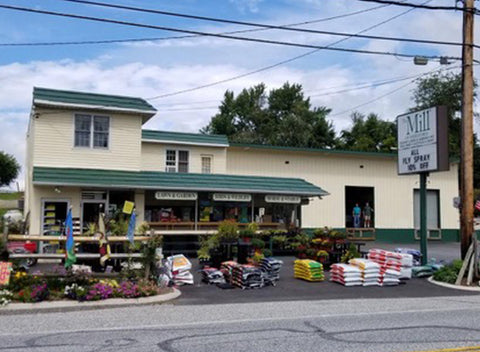
Visit any local The Mill store to discuss plant selection, bed preparation, and seasonal bloom timing with knowledgeable staff.