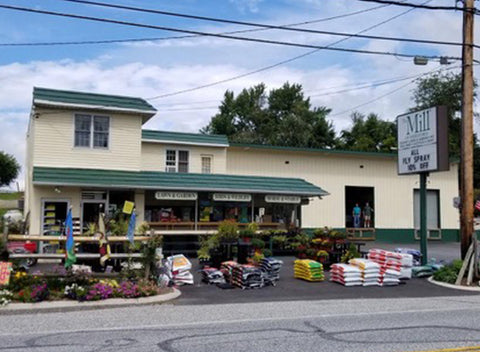

Certified Crop Advisor Ben Hushon with The Mill joined Market Day Report this week from White Hall, Maryland with a harvest update that reflects exactly what the community was hoping for a week ago: the 10-day dry window delivered and combines made up significant ground. The headline numbers tell the story clearly, with corn and soybean harvest both sitting at approximately 50% complete, up from 20% on corn and single digits on soybeans just seven days earlier.
Ten Dry Days Changed Everything
Last week Ben was reporting 10 good days of harvest weather in the forecast. Those days arrived and performed. With no meaningful rain in 10 days, combines ran consistently, growers who had been waiting for weather windows pushed hard, and the compressor spring calendar caught up considerably from where it stood heading into the final weeks of October.
The result is a harvest that has reached the halfway point across both major row crops at a time when the weather could shift at any moment and close the window for another stretch. Getting to 50% during a sustained dry period with modern equipment capacity is a significant milestone, and the community took full advantage of the conditions.
A Shout Out to the Logistics Behind the Harvest
Ben’s update this week carried a moment of appreciation that does not always make it into a harvest report but deserves to. While hauling corn for his father into local community storage last week, he found himself thinking about how fortunate the White Hall farming community is to have the grain storage infrastructure it does, and about the people who keep that system functioning during the most intensive stretch of the year.
Three major storage operations serve the broader community: Ma and Pa Farms, Trent and Mill Farms, and Lippi Brothers. These operations have made significant commitments to storage capacity that allow the community to move grain off farms quickly when harvest conditions are ideal. The importance of that capacity became particularly clear this year as the combination of compressed harvest timing and sustained dry weather pushed enormous volumes of grain into the system in a short period.
Ben noted that one storage facility he visited Saturday morning had taken in 110 trucks that day alone, with minimal grain flowing back out over the weekend. On-farm storage across the community is filling up or getting backed up at the peak of harvest, which is exactly what happens when no rain slows the inflow and trucking logistics have to catch up.
Ben offered a direct acknowledgment of everyone in the trucking, logistics, and storage side of Mid-Atlantic agriculture who keeps wheels turning during good weather. It is infrastructure that rarely gets the recognition it deserves, and this harvest season has made it visible.
Where Does the Grain Go? Inside the White Hall Export Story
The host asked a question that opened one of the more interesting conversations of the season: when the corn and soybeans come off farms in Carroll County and Harford County, Maryland, where do they actually go?
Ben started with soybeans and pointed directly to the Lippi Brothers operation in Carroll County as one of the most distinctive grain marketing stories in the region. Unlike most local soybean production that flows into domestic feed channels, the Lippi Brothers export 100% of their soybean production as human consumption product, shipped in containers out of the Port of Baltimore to markets in Asia.
That export channel is significant in the context of the White Hall community, which sits just east of Carroll County. It is also a channel that comes with requirements that domestic feed markets do not impose. Quality control for soybeans destined for human consumption in Asia centers heavily on the visual appearance of the beans. A soybean that does not look right on a plate is not a soybean that moves through that export channel regardless of its agronomic quality.
Camo Beans: A Quality Issue Hitting the Export Market This Year
That quality control requirement brings the second and most unusual agronomic story of Ben’s appearance into sharp focus. A specific genetic soybean variety grown in this region is producing discolored beans this season, a phenomenon that growers and grain handlers are calling camo beans or chocolate beans depending on who is doing the describing.
The discoloration appears to be tied to a particular genetic line expressed in this year’s crop, and the result is beans that look visually distinct from the clean, uniform appearance that export buyers require for human consumption. For domestic feed markets and cattle feeders, the discoloration is irrelevant. A discolored soybean delivers the same nutritional profile as a normal one and flows through domestic channels without issue.
For an operation like the Lippi Brothers that sells directly into export markets where consumers are buying the beans as a food product, the visual appearance of the grain matters enormously. A camo-colored or chocolate-tinted bean sitting on a plate in front of a consumer in Asia is not going to be received the way a uniformly light-colored bean would be.
The host confirmed this is not an isolated issue. The same discoloration has been reported in soybeans harvested in Nebraska this year, suggesting the phenomenon is more widespread than just the White Hall community and is connected to conditions or genetics that appeared across a broader geography in 2026. Ben’s assessment was measured: hopefully it is not something growers see again, but it is a real quality consideration for anyone moving beans through premium export channels this harvest season.
Connect With The Mill’s Agronomy Team
The Mill’s agronomy team is actively supporting growers across Maryland and southern Pennsylvania through the final weeks of harvest, grain quality assessments, post-harvest soil sampling, and planning for the 2027 crop season. With harvest now at the halfway point and storage filling quickly, having an agronomist tracking the details makes a difference in how the season closes out.
Visit The Mill’s Agronomy Division to discuss harvest outcomes, grain quality questions, and what comes next as the 2026 season approaches its finish line.