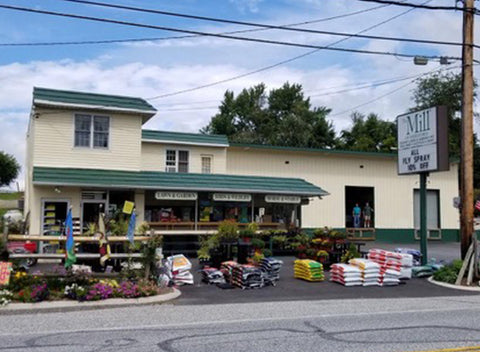

A big crop is good news, but a big crop also has to go somewhere. On the RFD-TV Market Day Report, Ben Hushon, Certified Crop Advisor with The Mill in White Hall, called the day "Thankful Monday" and used it to explain how a bountiful harvest is testing grain handling across Maryland and the Mid-Atlantic. The yields are a blessing, and the extra grain handling work to store and move that crop is a reminder of how many people it takes to get a crop to market.
A Bountiful Harvest, Uninterrupted by Rain
Harvest this season has been large and mostly uninterrupted. It has been over a month since measurable rain fell across the vast part of the region, which kept combines running and fields workable. Ben also noted that the area has been getting only about half as much rain as normal, a point he has raised on past Monday reports.
The yields tell the story. A farmer plants less than half a bushel of seed corn, and this year many farms are harvesting 200 bushels or more in return. That kind of return is a blessing for farmers, and it is also the reason grain handling has become a challenge.
When Grain Handling Capacity Runs Out
Ben described a Westminster operation, two counties west of White Hall, where grain handling now means storing 100,000 bushels of corn in bags and another 50,000 bushels of soybeans in bags. These are local farmers who also take on grain handling to help out the neighborhood. The harvest has been so bountiful that the grain went into bags.
A family farm operation in Harford County that set up its own grain handling faces the same situation. More than 80,000 to 85,000 bushels of corn are sitting on the ground there. Its grain handling is limited because the operation has been told it can send out only about six loads per day to the local feed mills. Ben said the majority of the Mid-Atlantic is dealing with the same grain handling squeeze.
The problem reaches beyond Maryland. Ben mentioned a farmer north of Cooperstown, New York, who was still unable to finish harvest last week because there was no place to haul grain.
The Extra Cost of Grain on the Ground
Putting grain on the ground is a choice that carries real expense. Grain handling operations that take on this cost have to gather the corn back up later, run it through the cleaner and the dryer again, and only then haul it to market. Ben said he is thankful for the farm grain handlers willing to absorb that extra cost so neighbors can finish harvest.
Host Tony added an important point. Conversations about harvest usually focus on the farmer, but grain handling depends on the whole chain, including the machinery folks and the trucking folks. When a crop is bountiful, everyone in that chain can make a living, and the extra work they put in makes it possible.
Market Snapshot
Markets were mixed on Monday morning. Corn futures were trading about a penny and three quarters higher at $4.50 and a half, in a trade range of just over six cents. January soybeans were up four and three quarter cents at $12.25 and a half, in a range of nearly 14 cents. March soft red wheat was down two and a quarter cents at $5.89 and three quarters, and March hard red wheat was down four and a quarter cents at $6.36. A flash sale of four million bushels of white wheat headed to unknown destinations did little to move the market. March cotton was up 153 points.
Grain Handling Checklist for Harvest Season
-
Talk with the local elevator or feed mill early about delivery schedules and daily load limits
-
Plan grain handling and storage for the full crop, including options if bins fill sooner than expected
-
Account for the extra cleaning and drying cost if grain has to be picked up from the ground
-
Keep trucking and equipment partners informed so loads move as soon as space opens
-
Record this year's volumes to guide next year's storage and grain handling plan
Talk to The Mill Agronomy Team About Harvest and Grain Handling
Strong yields make a strong case for planning grain handling ahead. Farmers with questions about crop planning, yield goals, or how this season's results shape next year can reach out to The Mill Agronomy Team. To learn more about The Mill, visit The Mill, explore The Mill's Knowledge Center, or find the nearest location with The Mill's store locator.