
Certified Crop Advisor Ben Hushon with The Mill joined Market Day Report this week from a double crop soybean field in Whitehall, Maryland, holding plants in hand that were in the ground just seven weeks ago. The report he delivered was one of the more optimistic of the entire 2026 season, and the reason is simple: August finally brought the rain that the entire crop community has been waiting for since early summer.
August Has Been an Amazing Blessing
Ben opened this week's update with a straightforward assessment of what has happened to rainfall patterns in August. Three quarters to one inch of rain fell over the weekend, continuing a stretch of precipitation that has made August the wettest month of the entire growing season since planting began in the spring. Ben used the word blessing without hesitation, and the context makes it easy to understand why.
The 2026 season has been defined by dry conditions at precisely the wrong times. July brought heat and drought stress during corn tasseling and pollination. Double crop soybeans that went in immediately after wheat harvest emerged into bone-dry soils. The desperate root growth those early beans showed, diving deep to find subsoil moisture while the above-ground plant remained small, told the story of a crop fighting for survival in its first weeks.
August changed that story. Consistent, meaningful rainfall events arriving through the heart of pod fill have given double crop soybeans across Maryland the moisture they need to develop pods and fill grain. What looked like a challenging crop seven weeks ago is now standing in fields and delivering on its potential in a way that growers who made the planting decision after wheat harvest are glad they bet on.
The Decision to Plant Double Crop Always Comes Down to the Unknown
Ben reflected on a dynamic that every double crop soybean grower in the Mid-Atlantic knows well. When the combine finishes the last pass through a wheat field in early July and the question of whether to plant soybeans behind it comes up, the answer always involves looking at a long-range forecast that can never fully be trusted.
The variables are real. Planting into heat and dry soils after wheat harvest is not ideal. A late-planted soybean has less growing season available to develop a full canopy, set pods, and fill grain before fall frosts become a risk in late October and November. Growers who chose not to plant double crop soybeans this year, reasoning that dry conditions and a poor forecast made the risk too high, had legitimate grounds for that decision.
For the growers in this community who made the bet and put seeds in the ground anyway, August delivered the answer they were hoping for. The rain came, the plants responded, and double crop soybeans that spent their first weeks barely surviving dry soils are now developing into a crop worth harvesting.
Deer Damage Is a Constant and Frustrating Reality
The second major topic Ben addressed this week was one that the host had flagged the previous week for follow-up: wildlife pressure on crops, specifically deer and groundhogs, and what growers in Maryland and Pennsylvania can realistically do about it.
Ben was candid about the nature of deer damage in a way that any grower who farms near wooded land in this region will recognize immediately. Deer do not eat a soybean plant to the ground and move on. If they did, the damage would be localized and the surrounding crop would remain intact. What deer actually do is browse: walking along field edges and through stands, taking a bite here and a bite there, knocking stalks over as they move in and out, morning and evening, every single day.
That pattern of damage is more insidious than concentrated grazing because it spreads across large areas of a field without any single spot being completely eliminated. A field that looks intact from a distance can be carrying meaningful browse damage across wide swaths of its canopy, and the yield impact accumulates across the entire affected area rather than showing up as obvious bare spots.
The wooded landscape surrounding farm fields throughout Maryland and Pennsylvania creates the ideal conditions for this problem. Deer have unlimited cover to spend their nights in, unlimited access to field edges, and unlimited motivation to feed on lush soybean canopy that represents one of the most attractive and nutritious forages available in the late summer landscape.
Groundhogs Deserve More Attention Than They Get
If deer damage is the more widely discussed wildlife threat, Ben made clear that groundhogs are a seriously underestimated yield problem that does not receive the attention it deserves.
Unlike deer, which spread their damage broadly across field edges and standing crop, a groundhog operates with a fixed home base. The burrow is the center of its feeding radius, and a single groundhog grazing multiple times per day in a soybean field will methodically eliminate the plants in the area immediately surrounding that burrow. The result is bare spots that show up clearly when walking a field, centered on a hole that is often visible at the field edge or within the stand itself.
Ben pointed out that while there are estimates on deer populations, there are essentially no reliable estimates on groundhog populations. The number is simply not well tracked. But any grower who has walked fields with active groundhog pressure knows the damage is real and the animals are persistent.
What Growers Can Do About Wildlife Pressure
The host asked Ben directly how growers battle deer and wildlife pressure at this scale, and his answer was measured and honest in a way that anyone who has tried the available products will appreciate.
There are at least six different categories of deer deterrent products on the market. Odor-based products use scents that deer associate with predators or that are simply unpleasant. Hot pepper-based formulations create chemical irritation on plant surfaces. A newer category uses frequency-based technology to create sounds or vibrations intended to deter deer from an area. Ben acknowledged that opinions vary widely on whether any of these products deliver consistent results at field scale.
The most effective option, as Ben put it directly: lead. Hunting is the most reliable population management tool available, and in most of Maryland and Pennsylvania, regular hunting seasons provide the primary check on deer populations that would otherwise grow unchecked. For growers facing serious out-of-season crop damage, special depredation permits are available through state wildlife agencies in some cases, though Ben noted they are not easy to obtain and the process takes time.
The honest reality is that wildlife pressure is a cost of farming in heavily wooded regions like the Mid-Atlantic, and while mitigation strategies exist, none of them fully eliminates the problem. Managing expectations and accounting for wildlife pressure in yield projections is part of the agronomic reality in this part of the country.
Soybean Markets Push Above $12
The market backdrop for double crop soybean growers heading into pod fill is broadly supportive. Ben's appearance came on a morning when soybean November new crop contracts pushed to $12.03 and a half per bushel, up 11 cents, with all new crop contracts now trading above the $12 threshold. That price environment adds real weight to the decision to plant double crop soybeans this summer and gives growers with developing pods reason to think carefully about forward marketing decisions in the weeks ahead.
Corn December contracts are at $4.85, up one and three quarters cents. Wheat markets are mixed, with Chicago soft red at $6.72 and a half and hard red Kansas City at $7.54. Soybean meal and bean oil are both moving higher for the second straight session, reflecting continued strength in the crush complex.
Connect With The Mill's Agronomy Team
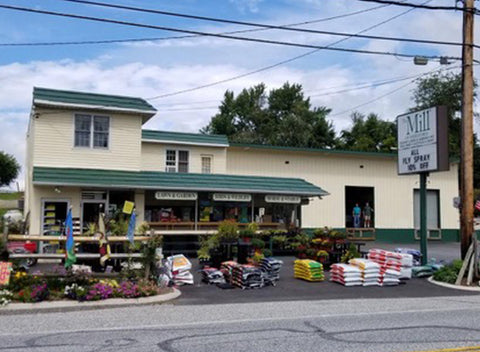
The Mill's Agronomy Team is actively monitoring double crop soybeans and full season corn through the final weeks of the growing season across Maryland and southern Pennsylvania. From pod fill assessments and harvest timing decisions to post-harvest planning for the 2027 season, The Mill's Certified Crop Advisors are in the field and available to help growers close out the year strong.
Connect with The Mill's Agronomy Team to get a crop assessment and talk through harvest timing as the season approaches its finish line.