
A well-designed bird-friendly garden does not happen by accident, but it does not require a large yard or a complicated plan. With the right combination of native plants, reliable water sources, thoughtfully placed feeders, and a few simple habitat features, any backyard in Maryland can become a space that attracts and supports a diverse and active community of birds throughout the year.
This guide walks through every element of building a bird-friendly garden, from the ground up.
Start With the Plants
Plants are the foundation of any bird-friendly garden. They provide food in the form of berries, seeds, and nectar. They offer shelter from predators and weather. They support the insect populations that most bird species, even seed-eating ones, depend on to feed their young. No feeder setup can fully replace what a thoughtfully planted yard provides.
Native plants outperform non-natives for birds. They have evolved alongside local bird species over thousands of years and produce the food types, at the timing birds need them, in ways that ornamental non-native plants typically cannot match. The following native trees, shrubs, and herbaceous plants are among the most effective for a bird-friendly garden in Maryland and the Mid-Atlantic region.
Trees
-
Oak (Quercus): The single most valuable tree for birds in the eastern United States. Native oaks host 532 species of caterpillars, providing the insect protein that birds need to raise young. Acorns feed jays, woodpeckers, and warblers. Native examples include white, red, pin, scarlet, and swamp white oak.
-
Cherry (Prunus): Host plant for 456 Lepidopteran species and a favorite food source for 41 bird species including orioles, Cedar Waxwings, woodpeckers, and thrushes. Native examples include black cherry and chokecherry.
-
Pine (Pinus): Provides critical winter cover, nesting sites, and food for 43 bird species including nuthatches, warblers, towhees, juncos, and woodpeckers. Eastern white pine and pitch pine are both native to Maryland.
-
Birch (Betula): Seeds and buds are highly prized by American Goldfinches, nuthatches, and orioles. Native birches host 411 species of butterfly and moth caterpillars. Gray, river, and yellow birch are all native to the region.
-
Maple (Acer): A host plant for 297 Lepidopteran species including Io and Luna moths. Seeds are eaten by cardinals and evening grosbeaks, and goldfinches use maple trees for nesting. Red, sugar, and silver maple are all native to Maryland.
Shrubs
-
Serviceberry (Amelanchier): Among the first native shrubs to fruit in late spring, feeding 36 bird species including Swainson's Thrush, Brown Thrasher, and Northern Flicker. Also a host plant for 124 Lepidopteran species.
-
Dogwood (Cornus): Provides cover, food, and nesting sites for 36 bird species including purple finches and Cedar Waxwings. Both the flowering dogwood tree and multi-stemmed shrub forms including red-osier and silky dogwood are valuable in the bird-friendly garden.
-
Elderberry (Sambucus): Fruit eaten by at least 48 bird species including thrushes, flycatchers, woodpeckers, and grosbeaks. One of the highest-value fruiting shrubs available for a Mid-Atlantic bird garden. American black elderberry is the native species.
-
Blueberry (Vaccinium): Host plant for 294 Lepidopteran species and relished by songbirds for its fruit. Highbush blueberry is native to Maryland and performs well in garden settings with appropriate soil pH.
-
Viburnum (Viburnum): A fruit-bearing native shrub used by at least 24 bird species including Cedar Waxwings, thrushes, and flycatchers. Southern Arrowwood and Blackhaw are both native Mid-Atlantic species well-suited to the garden.
-
Bayberry (Myrica): High-fat content berries provide critical energy for migrating birds at the moment they need it most. Northern Bayberry is native to Maryland and also serves as a host plant for 108 species of moths and butterflies.
-
Holly (Ilex): Provides food and cover in winter for 36 bird species including thrushes, Brown Thrasher, White-eyed Vireo, and woodpeckers. Winterberry Holly and Inkberry are both native Maryland shrubs that perform well in wet or shady areas.
-
Coral Honeysuckle (Lonicera sempervirens): The native alternative to the invasive Japanese Honeysuckle. An excellent food source for hummingbirds and 37 butterfly species, flowering repeatedly across three seasons. Listed as a container species on The Mill's native plant guide.
Herbaceous Plants
-
Black-Eyed Susan (Rudbeckia): Maryland's state flower and a top bird-friendly perennial. Seeds feed goldfinches, blue jays, and cardinals. Leave seed heads standing through fall and winter for maximum wildlife value.
-
Goldenrod (Solidago): Supports 115 species of butterflies and moths and provides seeds and insects for birds through fall. Often misidentified as a garden weed, goldenrod is one of the most wildlife-productive native perennials available for any Mid-Atlantic yard.
-
Native Sunflower (Helianthus): Provides abundant nectar and pollen, and seeds eaten by finches, sparrows, chickadees, nuthatches, titmice, and cardinals. Common sunflower and woodland sunflower are both native to Maryland.
-
Wild Bergamot and Bee Balm (Monarda): Listed on The Mill's native plant guide as Beebalm/Bergamot, this genus includes Wild Bergamot (Monarda fistulosa) and Scarlet Bee Balm (Monarda didyma), both native to the Mid-Atlantic and attractive to hummingbirds.
-
Native Aster (Aster): A huge family of late-season flowering plants supporting 109 Lepidopteran species. New England Aster and Blue Wood Aster are both native to Maryland and extend the bird-friendly garden's value deep into fall.
-
Joe-pye Weed (Eupatorium): The best native alternative to invasive Butterfly Bush. Produces abundant pollen and nectar for butterflies and feeds 41 caterpillar species. Hollow Joe-pye Weed is native to Maryland.
-
Switch Grass (Panicum virgatum): A native warm-season grass that provides ground cover, shelter, and food for 25 species of moths and butterflies. The Shenandoah cultivar is a Maryland-appropriate variety well-suited to garden settings.
-
Purple Coneflower (Echinacea purpurea): Listed as a container species on The Mill's native plant guide. Seed heads attract goldfinches and chickadees through fall and winter when left standing in the garden.
-
Spicebush (Lindera benzoin): Listed as a container species on The Mill's native plant guide. This native Maryland understory shrub produces red berries favored by migrating thrushes and warblers and is the host plant for the Spicebush Swallowtail butterfly.
The Mill carries flower seed and vegetable seed to help establish a productive garden, along with soil amendments, garden fertilizer and lime, and organic garden products to support healthy plant establishment from the ground up. Mulch and stone options are also available to help protect garden beds and retain moisture through the growing season.
Add a Reliable Water Source
Water is one of the most consistently overlooked elements of a bird-friendly garden, and one of the most effective. A clean, reliable water source attracts a far broader range of bird species than feeders alone, including many warblers, thrushes, and other insectivores that rarely visit seed feeders.
A simple shallow basin placed at ground level or on a pedestal in a visible, open location is all that is needed to get started. The basin should be no deeper than two to three inches at its deepest point, with a gradual slope that allows small birds to wade in safely.
A few practical tips for maintaining a bird bath effectively:
-
Change the water every two to three days to prevent mosquito breeding and keep it fresh
-
Scrub the basin weekly to remove algae and debris
-
Position the bath within view of a window for easy monitoring and enjoyment
-
Place it near shrubs so birds have a quick retreat to cover after bathing
-
Consider a dripper or small recirculating pump, as moving water attracts birds more effectively than still water and the sound carries across the yard
For birdbath water quality, the Biological Mosquito Control from Ecological Laboratories is a natural option that prevents mosquito larvae from developing in standing water without harming birds. The Mill's Wild Bird Supplies collection carries additional accessories to support a complete backyard bird setup.
Build a Layered Feeder Station
A single feeder in an open yard will attract birds, but a layered feeder station with multiple food types draws significantly more species and keeps activity consistent across the seasons. The goal is to offer something for each feeding guild: seed eaters, suet and fat seekers, nectar feeders, and fruit eaters.
Seed Feeders
Black Oil Sunflower Bird Seed is the single most effective seed for attracting the broadest range of backyard species in Maryland. Cardinals, chickadees, nuthatches, titmice, finches, and woodpeckers all take sunflower readily.
Safflower Seed is a strong secondary option that cardinals favor while squirrels largely avoid, making it particularly effective in feeders where squirrel competition is a persistent issue.
Medium Sunflower Chips offer a no-mess option that reduces shell waste and attracts the same species as whole sunflower. Browse the full wild bird seed collection at The Mill for the complete lineup.
The Birds Choice Small Hopper Feeder in Sage Green is a well-built recycled plastic hopper feeder that performs reliably in a garden setting and holds up well through all four seasons.
Suet Feeders
Suet is essential for attracting woodpeckers, nuthatches, chickadees, and wrens throughout the year. Suet Plus Woodpecker Blend and Peanut Butter Suet Cake are consistent performers across a wide range of species. The Recycled Plastic Suet Feeder from Bird's Choice is a durable option that fits naturally into a garden feeder station. Browse the full suet and mealworm collection for additional options.
Peanut Feeders
A peanut feeder draws in Blue Jays, woodpeckers, nuthatches, and chickadees. The Aspects Spruce Quick-Clean Peanut Mesh Feeder is a stainless steel mesh option built in the USA that is easy to clean and long-lasting. Raw Peanuts in the Shell from The Mill are a natural and affordable option for platform feeders and ground feeding areas. The Aspects Spruce Medium Quick-Clean Nyjer Mesh Thistle Feeder rounds out the station nicely for goldfinches and siskins.
Hummingbird Feeders
Any bird-friendly garden in Maryland should include a hummingbird feeder from late April through early October. The Nature's Way Scarlet Swirl Glass Hummingbird Feeder, the Nature's Way Charming Cherry Glass Gravity Hummingbird Feeder, and the Nature's Way Ribbed Rose Glass Gravity Hummingbird Feeder are all quality glass options available at The Mill. The Nature's Way Scarlet Silhouette Glass Hummingbird Feeder is a compact and affordable option for smaller spaces. Browse the full hummingbird collection including nectar and accessories.
Feeder Placement and Hardware
Proper placement and mounting make a real difference in how consistently feeders are used. The Mill carries Shepherd Hooks in 64-inch and 90-inch sizes, as well as a Double Shepherd Hook for hanging multiple feeders from a single post. The Tree Extension Hook 48 inch is a convenient option for mounting feeders from existing trees without hardware. The Woodlink Torpedo Squirrel Baffle mounts on shepherd hook poles to prevent squirrels from reaching feeders from below. Browse the full bird feeder collection for additional feeder styles and sizes.
Create Shelter and Nesting Opportunities
Plants provide the primary shelter in a bird-friendly garden, but a few additional habitat features meaningfully increase the number of species that stay and nest rather than simply passing through.
Nest Boxes
Nest boxes placed before the breeding season opens in early spring attract cavity-nesting species that cannot excavate their own holes. Eastern Bluebirds, Carolina Wrens, Carolina Chickadees, and Tree Swallows are all common nest box users in Maryland. The Mill carries a selection of bird houses suited to different species and yard sizes.
Brush Piles and Leaf Litter
Leaving a brush pile in a corner of the yard and allowing leaf litter to accumulate under shrubs and at garden edges provides critical foraging habitat. Many ground-feeding species including towhees, thrushes, sparrows, and wrens spend significant time foraging through leaf litter for insects and seeds. Removing all leaf litter from the garden removes one of its most productive foraging zones for birds.
Dead Wood
A dead or dying tree left standing, called a snag, provides nesting cavities for woodpeckers and secondary nesters, foraging surfaces for bark-probing species, and perch sites throughout the garden. Even a single standing dead branch in an otherwise healthy tree adds meaningful habitat value.
Reduce Hazards in the Bird-Friendly Garden
A bird-friendly garden also means a safe garden. A few straightforward adjustments reduce the most common sources of bird mortality in residential yards.
Window strikes are among the most preventable causes of bird injury and death. The Mill carries Songbird Essentials 5-Pack Window Decals in Leaf Medley, Hummingbird Window Decals 4-Pack, and Songbird Essentials Ultraviolet Hawk Decals, all of which help birds recognize glass surfaces and avoid collisions.
Additional steps to reduce hazards in the garden include:
-
Keep cats indoors or in enclosed outdoor spaces, as outdoor cats are one of the leading sources of bird mortality in residential areas
-
Avoid pesticide use in the garden where possible, as insecticides reduce the insect prey that birds depend on and can cause direct harm
-
Place feeders either within three feet of windows where strike speed is low, or more than thirty feet away where birds have time to change course
Seasonal Considerations for Maryland Gardens
A truly bird-friendly garden provides value in every season, not just when feeders are stocked through winter. Each season brings different opportunities:
-
Spring: Put hummingbird feeders out by late April. Plant nectar-producing natives to support migrating and arriving birds. Keep nest boxes clean and in place before breeding season begins.
-
Summer: Maintain water sources diligently as heat increases demand. Keep hummingbird nectar fresh and change it every one to two days in hot weather. Monitor feeder cleanliness closely.
-
Fall: Leave seed heads standing on coneflowers, sunflowers, and grasses. Berrying shrubs are at their most valuable as migrants move through the region.
-
Winter: Suet becomes especially important as insects disappear. Keep feeders consistently stocked. Evergreen plantings provide critical shelter during cold snaps.
Ask a Wild Bird Expert at The Mill
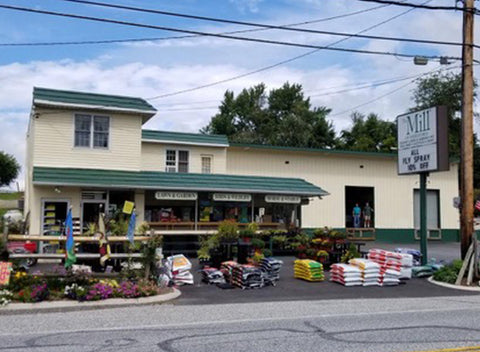
The Mill carries everything needed to build and maintain a bird-friendly garden across all store locations, from seed and feeders to garden supplies and native plant support products. The team is also available to answer questions directly through The Mill's Wild Bird Advice service.
Visit The Mill's Wild Bird Blog for more backyard birding guides and seasonal tips, learn more on The Mill's Knowledge Center, or find your nearest location at The Mill's store locator to speak with a wild bird specialist directly.