
Certified Crop Advisor Ben Hushon with The Mill joined Market Day Report this week from the Gross Brothers farm in White Hall, Maryland, standing in front of a parked combine with no sunshine visible and equipment sitting idle across the community. The scene behind him told the story without words: corn harvest is underway, but it has taken a temporary weather-driven pause.
Before getting into the agronomics of the week, Ben and the host shared a brief callback to last week's appearance worth mentioning. While Ben was reporting live from a cornfield at 1:30 PM Eastern, the host noticed movement in the corn behind him. What turned out to be rustling in the standing stalks was eventually identified by Ben as a couple of foxes. Ben recalled his father's longstanding advice: a fox visible in the middle of the day can signal something is wrong. He turned to look, had a moment of concern, and then quickly realized these were healthy, full-grown young pups simply playing. As the host noted this week, no foxes behind Ben today. Just rain, parked equipment, and no sunshine poking through.
Rain Brings Harvest to a Halt
A storm system that moved up through the region over the weekend delivered half an inch to an inch of rain across the White Hall community, bringing virtually every combine to a standstill. Ben described watching combines run Saturday morning through light, intermittent mist as growers tried to capture as many acres as possible before conditions deteriorated. When harder rain arrived after lunch, that was the end of harvest operations for the week.
Reporting Monday morning with damp conditions still lingering and no sun in the forecast for the immediate term, Ben confirmed that the Gross Brothers operation was hoping to get back in the field by Wednesday. The weather interruption is a familiar rhythm of fall harvest in the Mid-Atlantic, where rain systems can arrive quickly and cost growers several productive days at a time when every dry hour carries weight.
The good news amid the rain delay is that grain basis levels in the community remain strong, with no degradation despite the weather-related hold. For growers with corn ready to move when conditions allow, the market backdrop heading into late September remains supportive.
A Milestone Week for The Mill
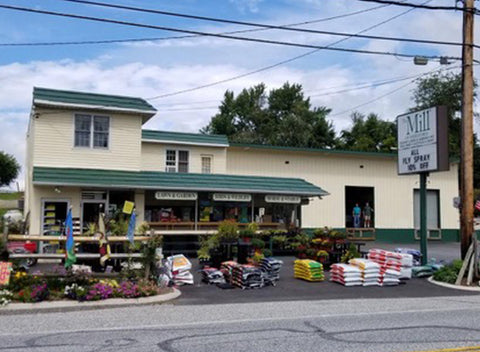
This week carries significance beyond the harvest update. The Mill is holding a grand opening for its new fertilizer storage and handling facility, a significant infrastructure investment that Ben described with clear pride and enthusiasm during his appearance.
The new facility represents a strategic commitment to how The Mill positions itself in the market for the growers it serves across Maryland and southern Pennsylvania. Rather than purchasing fertilizer at spot prices when application demand is highest and supply is tightest, on-farm fertilizer storage allows The Mill to buy product when pricing is favorable, store it, and deliver it to growers on their schedule rather than the market's schedule.
That flexibility is exactly what Ben advises commercial growers to pursue for their own operations, and The Mill is leading by example. The message to the grower community is direct: the people advising farmers on how to manage fertilizer timing and purchasing are doing the same thing at their own facility.
Why Fertilizer Supply Chain Matters for Mid-Atlantic Growers
The new storage facility is not only a business decision. It reflects a real and ongoing challenge in how fertilizer moves into and through the Mid-Atlantic region that every grower should understand.
The majority of nitrogen sources used in Maryland and southern Pennsylvania are imported, arriving primarily through three key receiving points: terminals north of Philadelphia, along the Chesapeake, and at the Port of Baltimore. When a vessel arrives with product, the window to unload and move that fertilizer through the supply chain is narrow. Demand spikes at predictable times of year, and operations that are not positioned ahead of those windows pay both higher prices and face greater supply uncertainty.
Phosphorus arrives through some of the same import channels, with additional domestic supply originating from production facilities in North Carolina. Potash is also largely imported. Each of these nutrients has its own supply chain dynamics, and the compounding uncertainty of global supply over the past five years has reinforced the value of storage capacity for any operation serious about managing input costs and availability.
Ben noted directly that the last five years in particular have made supply uncertainty and price volatility a near-constant condition. Operations with storage capacity have consistently been better positioned to manage through those conditions than those purchasing at the point of need.
The Mill's new facility is a direct response to that reality, and its opening this week is a milestone not only for the business but for the growers who depend on The Mill as their agronomic and input supply partner.
Harvest Is On the Way
Despite the rain delay, Ben's closing message was straightforward. Harvest is not stopped. It is paused. The Gross Brothers and the broader White Hall community are ready to move the moment conditions allow, and the crop that has been in the ground since spring is waiting in the field to be brought home.
Ben has been reporting from these same fields since March, tracking this season from frozen, waterlogged ground through a compressed planting window, summer drought, gray leaf spot pressure, August rainfall that salvaged test weight, and now the final stretch of bringing the 2026 crop out of the ground. The combines parked behind him this week are a temporary interruption to the end of a story that has been a full season in the making.
Connect With The Mill's Agronomy Team
The Mill's Agronomy Team is actively supporting growers across Maryland and southern Pennsylvania through fall harvest, post-harvest soil sampling, and early planning for the 2027 crop season. With the new fertilizer storage facility now open, The Mill is also better positioned than ever to help growers plan and position input programs ahead of the spring application window.
Connect with The Mill's Agronomy Team to discuss harvest timing, post-harvest agronomy, and how to get ahead of your 2027 input program before spring demand arrives.