
Choosing the right bird seed is one of the most impactful decisions a backyard birder can make. However, not all seed attracts the same birds and not all blends deliver equal value. Often, the cheapest bag on the shelf is rarely the most economical choice as generally the seed that keeps the cost low gets scattered on the ground and wasted, rather than eaten by birds.
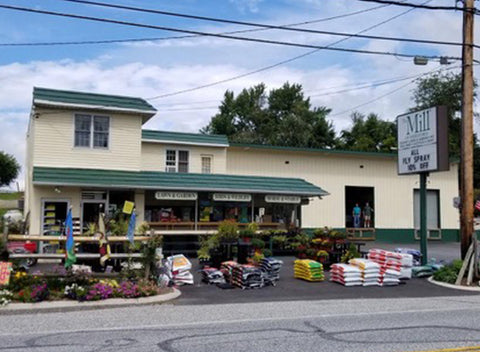
This guide breaks down the most common seed types available at The Mill, what each one does well, which birds it attracts, and how to decide what belongs in a feeder setup for any Maryland backyard.
Black Oil Sunflower: The Foundation Seed
If only one seed could be chosen for a backyard feeder, it would be black oil sunflower. Black oil sunflower is the single most versatile and broadly attractive seed available for feeding wild birds in Maryland and throughout the Mid-Atlantic region.
The name refers to the variety of sunflower seed, not a processing method. Black oil sunflower seeds have a thin shell and a high oil content relative to their size, making them easy to crack for a wide range of birds and black oil has a higher nutritional value than the striped sunflower seed variety more commonly associated with human snacking. The thin shell of black oil sunflower seed is particularly important because it allows smaller birds to access the seed, broadening the feeder appeal significantly.
The list of species that readily take black oil sunflower is long. Cardinals, chickadees, titmice, nuthatches, finches, sparrows, juncos, grosbeaks, and woodpeckers all visit black oil sunflower feeders with regularity. For Maryland backyards where the goal is attracting a wide variety of species to a single feeder, black oil sunflower is the most reliable starting point available.
Black Oil Sunflower Bird Seed is available at The Mill from 5 lb through 50 lb bags, making it practical for feeders of any size and for buyers who prefer to stock up through the fall and winter when feeding activity is at its peak.
For a no-mess alternative that delivers the same nutritional benefit without shell waste accumulating below the feeder, The Mill Medium Sunflower Chips Wild Bird Seed offers pre-hulled sunflower kernels that birds consume completely. Sunflower chips are particularly well-suited to feeders on decks or patios where shell debris creates a cleanup issue, and they attract the same broad species profile as whole black oil sunflower.
Safflower: The Cardinal Seed With a Built-In Squirrel Deterrent
Safflower is a white seed with a bitter coating that many mammals, including squirrels and European Starlings, find unpalatable. That characteristic makes it one of the most strategically useful seeds available for feeders where squirrel competition or starling pressure is a consistent problem.
Cardinals are the primary beneficiary of safflower at the feeder. They take to it readily and return for it consistently. House Finches, Chickadees, Titmice, and Mourning Doves also accept safflower, though the appeal is not as universal as black oil sunflower. For a feeder whose primary purpose is attracting cardinals and reducing squirrel activity, safflower is the most practical seed choice available.
Safflower Seed Wild Bird Food is available at The Mill in multiple sizes. For feeders that are switching from a mixed seed or sunflower-only approach to safflower, it is worth noting that birds may take a few days to investigate and accept the new seed, particularly if squirrels or other mammals have been monopolizing the feeder and birds have not been landing reliably. Once cardinals locate a safflower feeder, they typically become dependable daily visitors.
Nyjer and Thistle: The Finch Seed
Nyjer, commonly referred to as thistle seed, is a small, dark, oil-rich seed imported primarily from Africa and Asia. Despite the name, it is not the same plant as the common North American thistle. It is a sterilized seed specifically processed to prevent germination, which is worth noting for anyone concerned about plants sprouting beneath the feeder.
Nyjer is almost exclusively the domain of small finches. American Goldfinches, House Finches, Purple Finches, Pine Siskins, and Common Redpolls all take Nyjer with enthusiasm, and a feeder stocked with this seed during fall and winter will reliably draw goldfinches throughout the season. Nyjer is high in calories and oil content, making it particularly appealing to small birds that need to maintain body temperature through cold Maryland nights.
The key equipment consideration with Nyjer is feeder type. This seed is too small for standard tube feeder ports and will pour out of hopper or platform feeders without containment. A dedicated Nyjer feeder with small mesh ports or a tube feeder with narrow openings is the correct setup. The Aspects Spruce Quick-Clean Nyjer Mesh Thistle Feeder is purpose-built for this seed type, with a mesh surface that goldfinches cling to naturally while feeding.
Thistle Seed Wild Bird Feed from Birds Luv ’Em is available at The Mill in 5 to 25 lb bags. Given that Nyjer can go stale more quickly than other seeds when exposed to moisture, choosing a bag size that matches the pace of feeder activity helps keep the seed fresh and birds returning consistently.
White Millet: The Ground Feeder Seed
White millet is a small, round grain that does not get the same attention as sunflower or safflower, but it plays an important role in a complete backyard feeding setup. Millet is the preferred seed of many ground-feeding species that may rarely or never use an elevated feeder, including Song Sparrows, White-throated Sparrows, Dark-eyed Juncos, and Mourning Doves.
All of these species become significantly more active at Maryland feeders in fall and winter. Juncos arrive from northern breeding grounds beginning in October and are a reliable and highly visible feeder visitor through March. A platform feeder or a simple scatter of white millet on the ground beneath an existing feeder is often enough to establish a reliable ground feeding area that draws these species consistently.
The Mill White Millet Bird Seed is available in multiple sizes and works well both in low platform feeders and scattered directly on the ground or on a flat surface for ground-feeding species.
Peanuts: Year-Round Appeal for Jays, Woodpeckers, and Nuthatches
Peanuts are not a seed in the botanical sense but belong in any serious discussion of bird feeding options because of how effectively they draw species that are underserved by standard seed feeders. Blue Jays, Downy and Hairy Woodpeckers, White-breasted Nuthatches, Carolina Wrens, and Chickadees all visit peanut feeders with regularity.
Fall is the most active season for peanut feeding behavior, as Blue Jays and other species begin caching food in preparation for winter. A peanut feeder during October can draw remarkable activity as jays move aggressively to fill their winter stores.
The Mill Peanut Splits for Wild Birds are shelled peanut halves available in resealable pouches, well-suited for platform feeders and the Aspects Spruce Quick-Clean Peanut Mesh Feeder, which allows birds to cling and pull pieces through the stainless steel mesh. Whole corn also draws Blue Jays and larger ground-feeding birds in fall and winter. The Mill Whole Shelled Corn and The Mill Cracked Corn Medium/Coarse are both available for feeders and ground-level setups.
Seed Blends: When a Mix Makes Sense
Straight seed types give the most control over what species a feeder attracts and minimize waste from seeds birds do not prefer. But seed blends have a genuine role in a backyard setup, particularly for new birders who want to attract a broad range of species without managing multiple feeders and seed types simultaneously.
The key difference between a quality blend and a budget blend is the ingredient list. A quality blend centers around seeds birds actively seek, primarily sunflower, millet, and peanuts or tree nuts. A budget blend typically includes a high proportion of red millet, milo, or wheat, seeds that most songbirds in Maryland either ignore entirely or kick out of the feeder to access preferred seeds beneath them. The waste that results from low-quality blends quickly erodes the cost savings that made them look attractive on the shelf.
The Mill’s own blend lineup and the Birds Luv ’Em family of blends are both built around seed types that Maryland backyard birds actually eat:
-
The Mill Backyard Best Blend Bird Seed: a solid all-purpose starting blend suitable for a general feeder setup attracting a broad range of species
-
The Mill Supreme Blend Bird Seed: a step up in seed quality and species appeal for feeders where variety is the priority
-
The Mill Chesapeake Blend Bird Seed: a regionally appropriate blend developed with Maryland and Mid-Atlantic backyard species in mind
-
The Mill Backyard Conservation Mix Blend Bird Seed: a value-oriented blend that prioritizes the most commonly visited seed types in a clean mix without filler
-
The Mill Woodpecker Blend Bird Seed: a purpose-built mix designed to draw woodpecker species alongside standard seed-eating birds
The Birds Luv ’Em lineup offers additional variety at different price points:
-
Birds Luv ’Em Economy Wild Bird Seed Blend: an accessible entry-level blend for new birders or high-volume setups
-
Birds Luv ’Em Classic Wild Bird Seed Blend: a balanced everyday blend centered on preferred seed types
-
Birds Luv ’Em Deluxe Wild Bird Seed Blend: a higher-quality mix with increased sunflower and nut content
-
Birds Luv ’Em Premium Wild Bird Seed Blend: a top-tier blend for feeders where species diversity and reduced waste are the priorities
-
Birds Luv ’Em Songbird Sensation: a songbird-focused formulation well-suited to feeders targeting finches, sparrows, and cardinals
-
Birds Luv ’Em Farm Fresh Harvest Mix Wild Bird Seed Blend: a seasonal harvest-style mix that works well through fall and into winter
For something beyond a standard seed profile, Wild Delight Nut N’ Berry Wild Bird Feed incorporates fruit, nuts, and berries alongside traditional seeds to create a high-value offering that appeals to a wider range of species including thrushes, bluebirds, and waxwings during fall migration.
Building a Complete Feeder Setup
The most effective backyard feeding station is not a single feeder with one type of seed. It is a layered approach that offers multiple seed types in appropriate feeders at different heights, creating feeding opportunities for as many species as possible.
A practical starting setup for a Maryland backyard in fall and winter might include:
-
A hopper or tube feeder with black oil sunflower as the primary seed
-
A dedicated Nyjer feeder for goldfinches and small finches
-
A suet cage for woodpeckers, nuthatches, and chickadees
-
A platform or ground-level feeder with white millet for sparrows and juncos
-
A peanut mesh feeder for jays, woodpeckers, and wrens
Each addition draws a different guild of birds and gives species that might not overlap at the same feeder their own place in the yard. The browse the full wild bird seed collection at The Mill to see all available straight seeds, blends, and specialty options.
Ask a Wild Bird Expert at The Mill
The Mill carries one of the most complete selections of wild bird seed, feeders, and accessories in the region across all eight store locations. Whether putting together a first feeder setup or refining an existing one, the team at The Mill is available to help match seed choices to the specific birds visiting any yard.
Take advantage of The Mill’s Wild Bird Advice service, browse The Mill’s Wild Bird Blog for seasonal tips and bird profiles, or visit The Mill’s Knowledge Center for more guides. Find the nearest location at The Mill’s store locator.