
Why Watering Correctly Matters More Than Watering Often
Plants that are watered correctly at the right depth and frequency outperform those that are watered frequently but improperly. The goal is not to keep the soil surface moist. It is to deliver water where roots can reach it, in amounts the soil can absorb without pooling or running off, at a frequency that matches what the plant is actually consuming.
Getting that right starts with understanding how plant root systems actually function.
How Root Systems Work
Plant roots are more complex and far-reaching than most gardeners realize, and that understanding directly informs how and where to water.
A healthy plant root system has two primary components working together. Fine, fibrous feeder roots grow close to the soil surface and are responsible for the majority of water and nutrient absorption. These roots are sensitive, responsive, and critical to plant health. Larger structural roots grow deeper and extend further outward, anchoring the plant and providing the transport pathways that move water and nutrients up through the trunk and into the canopy.
Roots do not stay directly below the plant. They spread laterally under and beyond the canopy, often extending outward to twice the width of the canopy in their search for water and nutrients. This means watering only at the base of a trunk delivers water to a very small fraction of the root zone and misses most of the feeder roots that actually do the absorbing.
The correct watering zone for any tree or shrub starts about six inches out from the trunk and extends to the dripline, the outer edge of the canopy overhead. That entire zone is where water should be applied.
Plants also lose significant amounts of water through their leaves through a process called transpiration. During drought, extreme heat, or high wind conditions, a plant may shed leaves to reduce that water loss and protect itself. This is a survival response, not a sign of permanent decline, but it indicates that the root system is under significant moisture stress.
How Much Water Do Trees Need?
Tree watering requirements are more specific than most homeowners expect, and the numbers are worth knowing before assuming a weekly sprinkler pass is sufficient.
Under normal dry conditions, trees require approximately one gallon of water per square foot of canopy coverage. An alternative calculation: ten gallons of water for every inch of trunk diameter, measured at approximately 36 inches above ground level.
To put that into practical terms, a tree with a six-inch trunk diameter requires sixty gallons of water per week under normal dry conditions. During drought, high temperatures, or extended wind events, that requirement doubles to approximately 120 gallons per week.
That is a significant amount of water that a standard garden hose run for a few minutes will not deliver. Slow, deep watering that allows water to penetrate the soil over time is far more effective than a quick surface pass that runs off before it reaches the root zone.
The Critical Role of Mulch
Mulch is one of the most practical and impactful tools available for managing soil moisture around trees, shrubs, and garden beds. Applied correctly, it reduces evaporation from the soil surface, moderates soil temperature, and suppresses weed competition that steals moisture from established plants.
Apply mulch from about four to six inches out from the trunk or crown of the plant to the dripline, at a depth of one to two inches. Two common mistakes limit its effectiveness or actively harm the plant:
Mulching against the trunk. Keeping mulch in direct contact with the trunk or stem traps moisture against the bark, which promotes rot over time. Mulch should always be pulled back from the crown or trunk base, leaving a clear gap around the main stem.
Volcano mulching. Piling mulch in a deep cone around the base of a tree seems like more protection but causes the opposite problem. The deep pile intercepts water before it reaches the soil, keeps the crown wet, and damages the shallow feeder roots that sit near the surface. A flat, even application at a consistent depth of one to two inches performs far better than a decorative mound.
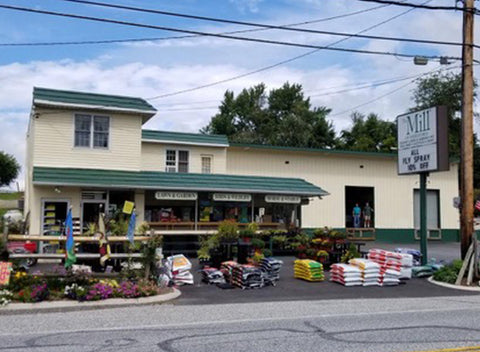
The Mill carries a full range of mulch options for both aesthetic and functional garden applications, available bagged or in bulk with delivery:
- Shredded Organic Hardwood Mulch - fibrous texture knits together to retain moisture and resist erosion; breaks down over time and enriches soil
- Pine Bark Mulch - all-natural, long-lasting; particularly well suited for acid-loving plants like azaleas and rhododendrons
- Pine Straw Mulch - lightweight and breathable; allows water and air to pass through while retaining moisture effectively
- Brown Dyed Mulch - clean finished appearance with moisture retention and weed suppression benefits
- Black Mulch - natural forest products with strong contrast for defined landscape beds
Bulk mulch and landscaping materials are available for larger projects and can be delivered through The Mill's Signature Delivery service.
Watering Flower Gardens and Vegetable Beds
The principles that apply to trees carry over to flower gardens and vegetable beds, with a few important additions.
Always water at ground level. Applying water to the foliage rather than the soil is counterproductive in almost every situation. Wet leaves during warm weather, particularly during a heatwave, can scald the leaf surface and create the moist conditions that fungal diseases like powdery mildew and leaf spot require to establish. A soaker hose or drip irrigation system that delivers water directly to the root zone eliminates this problem entirely and reduces water waste significantly.
Vegetable gardens require the equivalent of approximately one inch of water per week at ground level under normal conditions. During fruit or pod production, when plants are under the added demands of producing a crop, watering frequency should increase to twice weekly during dry stretches. Consistent moisture during this stage directly affects yield, fruit sizing, and the prevention of common problems like blossom end rot in tomatoes and tip burn in lettuce.
Understanding Soil Type and Moisture
The same watering frequency that keeps one garden healthy may leave another waterlogged or dry, depending on the soil type. Understanding how the specific soil in a garden holds and moves water prevents both overwatering and underwatering.
Clay soils retain moisture for significantly longer than other soil types. The fine particles hold water tightly, which can be an advantage during dry periods but a liability during wet ones. Clay soil gardens generally require less frequent watering, and overwatering can deprive roots of the oxygen they need.
Sandy soils drain quickly and dry out fast. Water moves through them rapidly and does not linger in the root zone long enough for plants to take full advantage of it. Gardens on sandy soil require more frequent watering and benefit greatly from organic matter additions that improve water retention.
Loamy soils fall between the two, holding moisture well while still draining adequately. Most plants perform best in loam, and most soil improvement programs aim to move sandy or clay soils closer to this profile through compost and organic matter additions.
The simplest way to assess actual soil moisture before watering is to dig a small hole four to six inches deep with a trowel. If the soil at that depth is still visibly moist and clumps together when squeezed, additional watering is not yet needed. If it crumbles and feels dry, it is time to water.
For gardeners looking to improve their soil's water-holding capacity or drainage, The Mill's soil amendments collection includes compost, conditioners, and organic matter options that address both extremes. Soil testing services are also available in store to provide a complete picture of what the soil currently contains and what it needs.
A Practical Watering Summary
- Water trees from six inches out from the trunk to the dripline, not at the base
- Calculate tree water needs: 10 gallons per inch of trunk diameter per week under normal conditions, doubled during drought
- Mulch from four to six inches out from the crown to the dripline at one to two inches deep, never against the trunk
- Water flower gardens and vegetable beds at ground level, never overhead during warm conditions
- Vegetable gardens need approximately one inch of water weekly, increasing to twice weekly during fruit production
- Check soil moisture at depth before watering rather than following a fixed schedule
- Adjust frequency based on soil type: clay soils need less frequent watering, sandy soils need more
Get the Right Products at The Mill
The Mill carries mulch, soil amendments, compost, and garden supplies to support healthy watering practices for trees, shrubs, and gardens of every size. Bagged and bulk options are available in store and online, with delivery available for larger landscaping projects.
Visit any local The Mill store or explore the mulch and landscaping collection and soil amendments collection at themillstores.com. For personalized guidance on soil preparation and plant care, The Mill's garden consultation service is available to help tailor a program to specific site conditions.