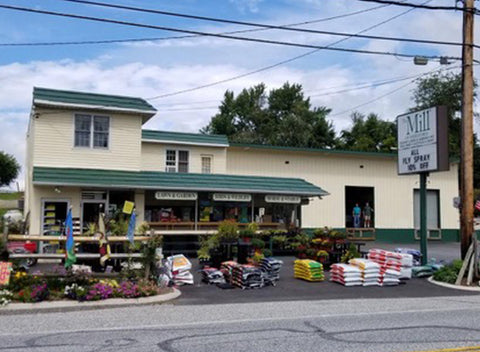

Certified Crop Advisor Ben Hushon with The Mill returned to Market Day Report this week with an encouraging spring field update from Whiteford, Maryland. While the broader story of limited field access and a growing spring work backlog continues, wheat performance across the region is emerging as a genuine bright spot heading into the second quarter of the season.
Wheat Is Off to a Strong Start
Wheat fields in the Whiteford area and throughout the Mid-Atlantic are showing strong early season growth. Fields that received timely nitrogen applications are performing well, with dense canopy development and good color indicating that fertility programs are taking hold.
One visible indicator on treated fields is slight tip burn on the leaf tissue, which Ben noted is a normal and expected response from nitrogen applied during a recent dry spell. Tip burn of this type does not signal a problem with the crop. It is simply cosmetic evidence of where dry fertilizer contacted leaf tissue before adequate moisture moved it into the soil. Once rain arrives and temperatures continue climbing, the crop moves past it quickly.
Last year presented a difficult contrast. Wet conditions through the second half of May and the entire month of June during the heading and flowering stage compromised wheat quality across much of the region. This year's crop is currently showing none of those problems, and growers are approaching the season with renewed optimism.
Field Work Remains Limited but Improving
The spring field work story remains largely the same as the previous two weeks. Ben described conditions as a repeat of last week, with limited opportunities to get into fields but a decent stretch of workable days since the prior Monday.
That window is closing again. Rain chances and unsettled weather are in the forecast for the remainder of the week, which will once again push growers back from the field at a time when the spring task list is still substantial. Manure applications, lime spreading, and fertilizer programs remain incomplete across the region, and the calendar continues to move forward regardless of what the weather cooperates with.
The situation reinforces a pattern that has defined this spring across Maryland and southern Pennsylvania. Productive stretches of a few days are being followed by weather setbacks that prevent the sustained field access growers need to work through the backlog.
Harvest Is Still Months Away, But the Timeline Is Set
With the wheat crop not yet at the heading stage, harvest remains a long way off. Ben confirmed that the Fourth of July is the target window when combines typically begin rolling in this region, a timeline that holds true most years for soft winter wheat in the Mid-Atlantic.
That fixed endpoint matters for agronomy decisions between now and then. Growers still need to complete second nitrogen applications on wheat, manage disease pressure through the heading and flowering stages, and make timely fungicide decisions if conditions warrant it. Every workable field day between now and July carries added weight given how compressed the season has been.
Corn Planting Is the Next Major Milestone
The spring field update is shifting from wheat management to corn planting preparation. Ben indicated that corn planter pictures are approximately three weeks away, a meaningful signal that the transition from small grain management to row crop planting season is approaching quickly.
For growers with both wheat and corn acres, the overlap in timing creates real scheduling pressure. Pre-plant fertility work, soil preparation, and seed sourcing all need to be squared away before planters can roll. Growers who have not yet finalized their corn programs with an agronomist should be doing so this week.
Connect With The Mill's Agronomy Team
The Mill's Agronomy Team is working alongside growers across Maryland and southern Pennsylvania through every phase of this compressed and challenging spring. From wheat management and nitrogen timing to corn planting preparation and pre-plant fertility programs, The Mill's Certified Crop Advisors are ready to help growers make the most of every workable window.
Connect with The Mill's Agronomy Team to get your spring program in order before corn planting season arrives.